When considering office furniture, durability is a top priority. Workers spend long hours at their desks. A reliable desk can enhance productivity and comfort. The right materials play a crucial role in achieving this. But what are the best materials for durable office desks?
Industry expert Amy Johnson, a furniture designer with over a decade of experience, emphasizes, “Quality materials spell the difference between a short-lived desk and one that withstands daily use.” High-quality wood, metal, and composite materials have unique advantages. Each offers different aesthetics and durability levels.
Understanding these choices is vital for buyers. Not every option is suitable for every workspace. Some materials are prone to scratches or wear. Others may not align with modern design preferences. A thoughtful approach to material selection ensures a balance of style and longevity.
Understanding the Importance of Material Selection for Office Desks
When selecting materials for office desks, the importance cannot be overstated. Durable desks contribute to both functionality and aesthetics. Industry data shows that 90% of office workers believe a well-designed workspace boosts productivity. A desk made from high-quality materials lasts longer, reducing replacement costs.
Wood, metal, and laminate are popular choices. Each material has unique attributes that affect durability and aesthetics. Wood offers warmth and classic appeal. Metal provides strength and a modern look. Laminate is often cost-effective, offering moisture resistance. Understanding these qualities is key to making informed decisions.
Tips: Consider the desk’s weight capacity. A heavier desk usually indicates sturdiness and durability. Evaluate your workspace and choose materials that align with your design goals. A poorly chosen desk can lead to frustration. Always research before making a purchase. Look into reviews or reports on material longevity to ensure a wise investment.
Overview of Top Materials Used in Durable Office Desks
When selecting materials for durable office desks, understanding their strengths is essential. Wood is a traditional choice, offering natural beauty and sturdiness. High-quality hardwood, such as oak or maple, can endure heavy use. However, it may require regular maintenance. Particleboard is a cost-effective alternative, but it lacks durability compared to solid wood.
Metal desks, often made from steel or aluminum, provide strength and longevity. They resist scratches and dents well. However, they can be heavy. Glass desks have modern appeal but can be prone to damage if not handled carefully. Interestingly, a report from the Office Furniture Research Group indicates that desks made from a blend of materials, like wood and metal, often balance aesthetics with functionality.
Tips: Consider how much wear your desk will face. If you have a busy workspace, opt for materials that withstand stress. Regularly check for scratches or damage. Often, overlooked maintenance can affect your desk’s lifespan. Additionally, the color and finish can impact your workspace ambiance, so choose wisely to create a positive atmosphere.
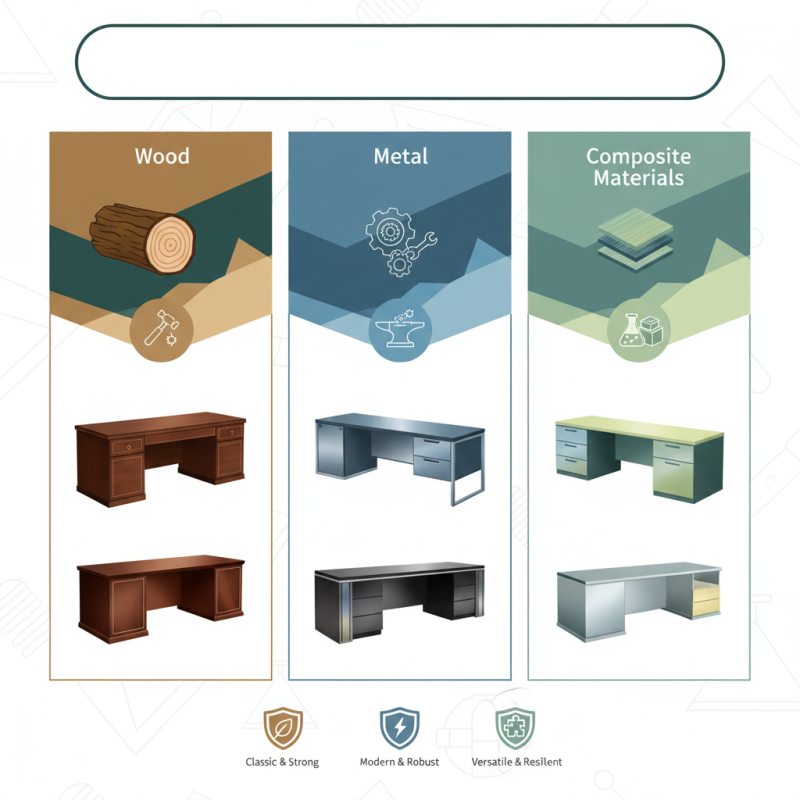
Comparative Analysis of Wood, Metal, and Composite Materials
When choosing materials for office desks, understanding the pros and cons of wood, metal, and composite options is key. Solid wood is a classic choice. It offers durability and a timeless aesthetic. Reports indicate that high-quality hardwood can last for decades. Yet, wood is vulnerable to scratches and moisture damage. Regular maintenance is essential to keep it in prime condition.
Metal desks provide a modern look and exceptional strength. According to industry research, metal surfaces can support heavier loads without warping. However, they may be prone to rust if not coated properly. Additionally, metal desks can be cold and unwelcoming. Some users may find them less comfortable for extended hours of work.
Composite materials are growing in popularity for their versatility. They can mimic the appearance of wood while being lightweight and often more affordable. Research shows that high-pressure laminates can resist scratches and stains effectively. Still, composite materials may not have the same longevity as solid wood or metal. Users should weigh cost against potential lifespan. Each material has its place, reflecting user needs and priorities.
Top 10 Best Materials for Durable Office Desks - Comparative Analysis
| Material |
Durability (Years) |
Cost ($) |
Sustainability |
Maintenance |
| Solid Wood |
30+ |
600-1200 |
High |
Moderate |
| Plywood |
15-20 |
200-700 |
Moderate |
Low |
| Metal |
20-50 |
300-1000 |
High |
Low |
| MDF |
10-15 |
150-400 |
Low |
Moderate |
| Particle Board |
5-10 |
100-300 |
Low |
High |
| Glass |
15-25 |
200-800 |
Moderate |
Low |
| Bamboo |
20-30 |
250-600 |
High |
Moderate |
| Laminate |
10-20 |
100-500 |
Low |
Low |
| Recycled Materials |
10-40 |
150-700 |
Very High |
Moderate |
Sustainability and Eco-Friendly Options for Office Desk Materials
When selecting materials for office desks, sustainability is key. Many buyers prioritize eco-friendly options. Reports indicate that about 81% of consumers prefer products that are sustainably sourced. Choosing materials responsibly can significantly reduce environmental impact.
Bamboo is one such option. It grows rapidly and can be harvested without damaging ecosystems. In contrast, traditional hardwood takes decades to mature. Similarly, recycled metal provides durability and is less energy-intensive than new production. According to industry data, using recycled materials can reduce carbon emissions by up to 75%.
Yet, there are challenges. Not all bamboo is harvested sustainably. Some products use chemicals that compromise natural benefits. Furthermore, the oversupply in the market may lead to lower quality. Buyers must research suppliers carefully to ensure ethical practices. Materials like reclaimed wood can also be appealing. They offer unique aesthetics but may require more maintenance. Select wisely to balance durability and sustainability.
Factors Influencing the Durability of Office Desk Materials
When selecting materials for office desks, durability is a key factor. Several aspects influence this attribute. Material hardness plays a vital role in determining how well it withstands wear and tear. For instance, hardwoods like oak and maple score high on the Janka hardness test, making them resistant to dents and scratches. According to the American Hardwood Information Center, these species are preferred for their longevity.
Moisture resistance is another crucial factor. Materials like metal and high-pressure laminate are less likely to warp or swell when exposed to humidity. Data from the National Institute of Standards and Technology indicate that moisture-related damage accounts for a significant percentage of furniture failure. This suggests that careful selection of materials can lead to more sustainable office furniture.
Finally, construction methods also affect desk durability. Solid wood offers robustness, but manufactured boards, like MDF, can be more affordable yet sometimes less durable. A study from the Furniture Research Journal highlights that even well-crafted MDF desks can suffer over time if not properly maintained. Making informed choices about desk materials will ensure that they remain functional and attractive long-term.
Top 10 Best Materials for Durable Office Desks
FAQS
: Material selection affects functionality and aesthetics, impacting productivity and long-term costs.
Wood, metal, and laminate are popular choices, each with distinct characteristics.
Wood provides warmth and a classic look, while metal offers strength and a modern aesthetic.
Eco-friendly materials reduce environmental impact and are increasingly preferred by consumers.
Bamboo is sustainable, but buyers must ensure it’s harvested responsibly.
Recycled materials are durable, reduce energy consumption, and lower carbon emissions significantly.
A heavier desk often indicates better sturdiness and durability, which is essential for long-term use.
Reclaimed wood offers unique aesthetics but may need more maintenance than other materials.
Risks include poor-quality products and the presence of harmful chemicals in some sustainable options.
A poorly selected desk can lead to frustration, affecting both comfort and productivity levels.
Conclusion
In the quest to determine what are the best materials for durable office desks, it is crucial to understand how material selection impacts both functionality and longevity. The article highlights various materials commonly used in the construction of sturdy desks, including wood, metal, and composites, each offering unique advantages and considerations. A comparative analysis reveals that while wood provides aesthetic appeal and warmth, metal is celebrated for its strength and modern look, whereas composite materials often combine the best of both worlds with added sustainability benefits.
Additionally, sustainability is a growing concern, with eco-friendly options gaining popularity among buyers seeking responsible choices. Factors such as construction techniques, finish quality, and environmental conditions significantly influence the durability of these materials. By weighing these elements, prospective buyers can make informed decisions to ensure their office desks meet both durability and environmental standards.

 Vant Furniture