How to maximize storage in a minimalist office? The goal is not to hide every object or make the room feel empty. It is to give useful things a clear place while keeping the desk calm and workable. Marie Kondo, organizing consultant and author, writes, “The question of what you want to own is actually the question of how you want to live your life.” That idea applies to office storage: keep what supports your work, and make access easy. A slim drawer unit, a wall-mounted shelf, or a labeled tray can help more than another bulky cabinet. Small choices matter.
This guide explores seven practical ways to reclaim space without crowding the room. You’ll see how to use vertical surfaces, choose furniture with built-in storage, manage cables, and group supplies near where they are used. Think of a laptop stand with a shallow compartment, folders arranged by project, or a single tray for incoming paperwork. Keep it visible. A tidy surface is useful, but perfection is not the measure of a good office. Papers can pile up again; plans sometimes need adjusting. The important part is noticing what creates friction and changing the setup accordingly. With a few thoughtful systems, even a compact office can feel open, efficient, and personal—without sacrificing the tools you rely on.
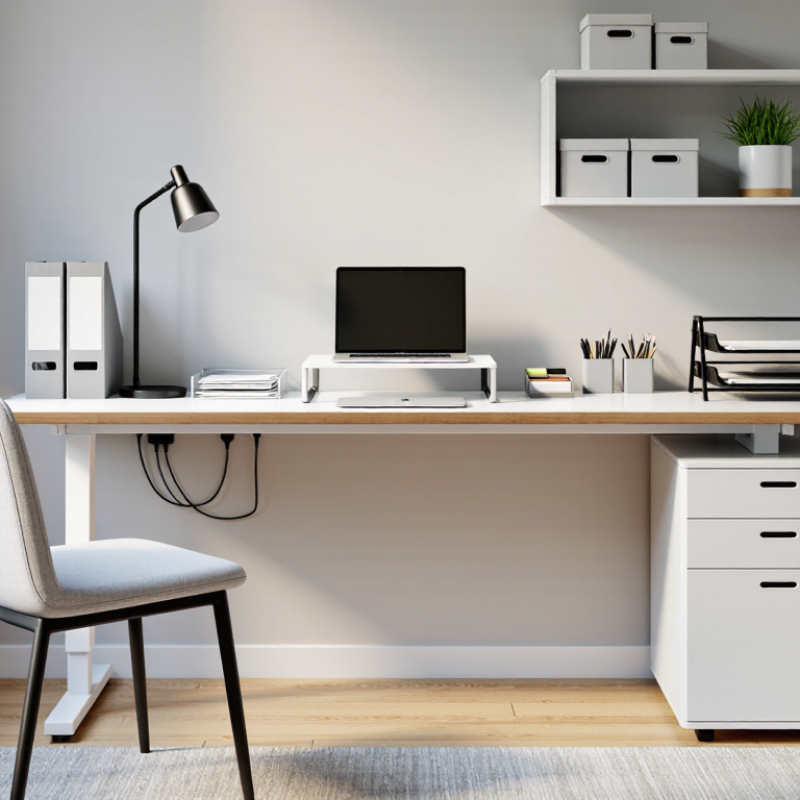
Before adding shelves or storage boxes, assess what the office actually uses. Empty one drawer at a time and sort items into daily, occasional, duplicate, and obsolete groups. Keep frequently used tools near the desk; move archived papers and seasonal supplies elsewhere. McKinsey Global Institute’s 2012 report, The Social Economy, estimated that interaction workers spend about 19% of their workweek searching for and gathering information. That figure does not measure office clutter directly, but it shows why easy retrieval matters. A labeled tray for active documents can help. So can removing outdated printouts and keeping only one working copy of common forms.
Tips: Set a 15-minute timer and review one shelf or drawer. Ask when each item was last used, and whether a digital copy or shared supply would serve the same purpose. Keep a small “decide later” box, but date it and revisit it within a month.
Be practical, not ruthless. A spare charger may earn its space; three tangled cables probably do not. Some “just in case” items will survive the first pass, and that is normal. Still, don’t let a maybe-useful pile become permanent storage. Record what you remove and what you keep, then repeat the audit after a few weeks.
A minimalist office does not need more floor cabinets; it needs better use of its walls. Mount a sturdy shelf above the desk for reference books, paper trays, and rarely used supplies. Keep the bottom shelf within easy reach, and reserve higher shelves for lightweight items. Heavy binders belong lower down. Small details matter: label matching containers, leave a little empty space, and secure shelves to suitable wall supports. A packed shelf can look efficient, but it is awkward to use.
Use a rail or wall-mounted organizer beside the desk for items handled every day: a notebook, charging cable, mail, and scissors. Put frequently used items around eye or shoulder height, not above your head. The U.S. Environmental Protection Agency reported that paper and paperboard made up 23.1% of U.S. municipal solid waste in 2018, in its Advancing Sustainable Materials Management report. A labeled vertical file and a small recycling bin can help prevent loose documents from spreading across the desk. Measure before drilling, and check the shelf’s load rating. One honest drawback: wall storage can become a dumping ledge. Review it weekly, and remove items you have not used.
Adding shelves upward can increase storage surface without taking up more floor space. This chart shows the calculated shelf area for 36-inch-wide, 10-inch-deep shelves: each shelf adds 2.5 square feet.
In a minimalist office, each piece of furniture should earn its footprint. A desk with shallow drawers can store pens, charging cables, and notebooks without taking away legroom. Keep daily tools near the front; use deeper compartments for paper and spare supplies. Small detail, big difference. Before choosing a desk, measure its drawers and the items you actually use. A thick planner may not fit, even when the listed dimensions seem generous. It is easy to overlook that until the furniture is already in place.
Look for pieces that serve two purposes. A slim filing cabinet can work as a side table, while a storage bench can hold folders and provide a place to sit. Shelves built above a desk free the work surface, but keep heavy items low and within easy reach. A cabinet used as a printer stand should have enough load capacity and room for airflow. The compromise is real. Multipurpose furniture can be bulky, and hidden compartments may become clutter traps. Leave one drawer partly empty; that small bit of slack makes the system easier to maintain.
Give each supply and document type a fixed home. Keep daily tools within arm’s reach: pens in a shallow tray, sticky notes in one drawer, and charging cables in a small bin. Put active project papers in upright, clearly labeled folders. Store archived files separately, away from the desk’s main work area. This makes the layout easier to scan and reduces visual clutter.
McKinsey Global Institute’s 2012 report estimated that knowledge workers spend about 19% of their work time searching for and gathering information. That figure covers information broadly, not just office supplies, but it shows why retrieval deserves attention. Use labels that name a task, such as “Invoices to process,” rather than vague labels like “Miscellaneous.” Keep frequently used items at eye or hand level. Review each zone weekly; return misplaced objects before they spread. Small routines matter.
A zone system is not magic. Too many categories can make filing slower, and labels may stop matching real work. Start with three or four zones, then adjust after a week of use. A clear tray for incoming papers can help, but it can also become a pile. Be honest about that. If documents keep collecting there, give them a scheduled review time or simplify the categories.
A minimalist office stays useful when cables and paper have a home. McKinsey Global Institute’s 2012 report, The Social Economy, estimated that knowledge workers spend 19% of their workweek searching for information. A tidy filing routine cannot eliminate that time, but labeled folders and one active-work tray can make everyday documents easier to find. Keep only current projects within arm’s reach. Archive completed work weekly, not whenever the mood strikes.
Cables need the same simple rules. Route power and data cords along the back edge of the desk, secure them with reusable ties, and leave a little slack near plugs. Label both ends before moving equipment; otherwise, the neat bundle can become a guessing game. Keep chargers in one shallow drawer, separated from paper. Small changes matter. A cable tray may help, but it will not fix a desk overloaded with devices.
Paper deserves a deliberate limit. The U.S. Environmental Protection Agency reported that paper and paperboard made up 23.1% of U.S. municipal solid waste in 2018; this figure covers all sources, not offices alone. Use a small inbox, scan records that do not need originals, and recycle finished drafts according to local guidance. The system does not have to look perfect. Review it each Friday, remove what no longer earns its space, and adjust the setup when it stops working.
Mount a sturdy shelf above the desk for books and paper trays. Keep heavy binders low and lightweight items higher. Leave some empty space. Check wall supports and load limits before installing it.
Keep daily items there, such as a notebook, scissors, mail, and a charging cable. Place them near eye or shoulder height. A weekly check helps stop the organizer becoming a dumping ledge.
Measure drawers and the items you plan to store before buying. Shallow drawers suit pens and cables; deeper ones can hold spare paper. Listed dimensions can still mislead.
Yes. A slim filing cabinet can double as a side table, and a storage bench can hold folders. Check its footprint and weight capacity. Hidden storage can become cluttered.
Use one active-work tray and labeled folders. Keep current projects within reach, then file completed work weekly. Scan records that do not require originals, and recycle drafts according to local guidance.
Route cords along the desk’s back edge and secure them with reusable ties. Leave slack near plugs, and label both ends before moving equipment. Small change. Keep chargers in one shallow drawer, away from paper.
Try a brief review each Friday. Remove items you no longer use and adjust shelves, drawers, or folders when they stop helping. It may not stay perfect. That is normal.
Check each shelf’s load rating and place heavier items lower. A cabinet holding a printer needs enough capacity and airflow. Measure first. Easy to forget.
How to maximize storage in a minimalist office? Start by reviewing everything in the workspace and removing items that are no longer useful. Keeping only necessary supplies and documents makes it easier to organize what remains and prevents clutter from returning. Then make use of vertical space with shelves and wall-mounted organizers, reserving desk surfaces for everyday tasks rather than long-term storage.
Choose furniture that provides built-in storage or serves more than one purpose, such as a desk with drawers or seating with concealed compartments. Group supplies and documents into clearly defined zones so each item has a convenient place and is easy to find. Finally, manage cables and papers with simple organizers and regular sorting. These practical habits help create a tidy, functional office while making the most of its available space.

Vant Furniture